Basic HTML Version



Although we hope to avoid
disasters, we can never be too
ready or too prepared.
T
he widespread damage from the
Santa Ana winds last fall and the
resulting power outages in the San
Gabriel Valley served as a wake-up call
in regard to our disaster preparedness.
Scientists continue to warn that “the big one”—
earthquake, that is—is overdue, and we should
expect it at any time.
On the night of Nov. 30–Dec. 1, power to our hospital
was knocked out as a result of the high winds, and
we ran on emergency power most of the next day.
Prevailing in crisis
Our sta and the sta of the city of Arcadia should
be congratulated on their quick responses and
cooperative eorts as we went into local disaster
mode. anks to their professional management of
the situation, we continued to function eectively.
Despite handling a higher number of cases
than normal in the emergency department, our
sta continued to provide the exceptional care
experience that our patients should expect.
Always prepared
Although Methodist Hospital regularly conducts
drills to ensure readiness for handling various kinds
of community disasters, it is dicult to be certain
how things will go in a real disaster. We found out
on that December day as sta members stepped
up to help patients and families through the event.
It’s your cue
I urge you to assemble an emergency supply kit for
your home and oce. e American Red Cross has
information on putting together a kit. Although we
hope to avoid disasters, we can never be too ready
or too prepared.
TO
prepare for disasters, “pre” is impor-
tant to stress—that is, gather emergency
items
in advance
, putting them all in one
place and letting everyone in the family
know where they are. If an emergency
occurs, you’ll be ready to fend for your-
selves for a few days, if needed.
Making up a family emergency kit is
a great family project. Pack items in
containers that are easy to grab and
carry, such as a duffel bag or one or two
camping backpacks.
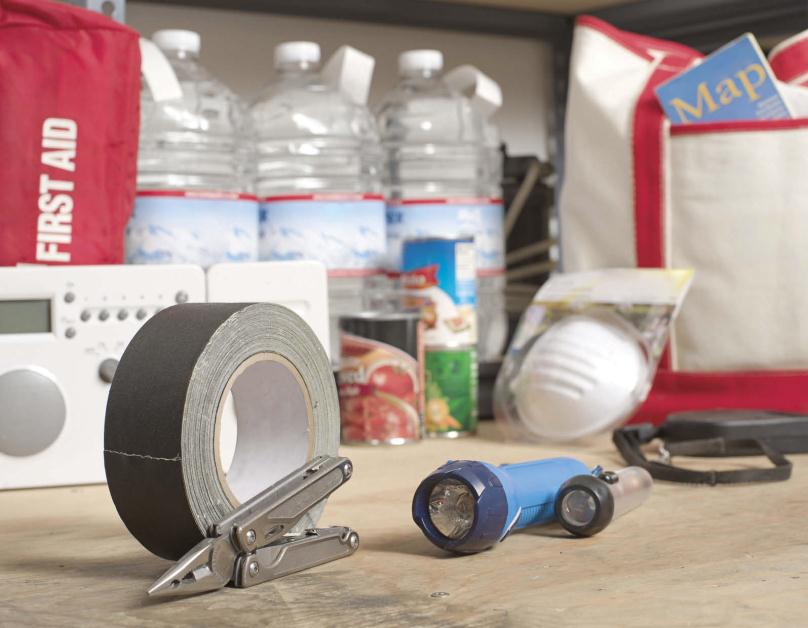
Begin with these basics:
»
A three-day supply of water (about
1 gallon per person, per day) and
nonperishable food.
»
A can opener and utensils for cooking
and eating.
»
Sanitation and hygiene items, such as
toilet paper.
»
A flashlight and extra batteries.
»
A hand-crank or battery-powered radio.
»
Extra clothes and shoes.
»
Photocopies of important documents,
such as emergency contacts, insurance
policies, birth certificates and a list of
medicines.
»
A first aid kit.
»
A multipurpose tool.
»
Blankets or sleeping bags.
»
Duct tape and plastic sheeting to create
a shelter.
»
Any special items, such as medicines,
baby formula and pacifiers, or food and
water for pets.
Keep the supplies in a cool, easy-access
spot and replace the food and water
every six months. Rethink the kit once
a year to keep up with your family’s
changing needs, advises the Federal
Emergency Management Agency.
For more ideas—including additional
items to pack and what else to consider
during emergencies and evacuations—
visit the American Red Cross website at
www.redcross.org
.
2
Letter from the CEO
Dan F. Ausman,
President and
CEO, Methodist
Hospital
Peace of mind:
Making an emergency supply kit
Dan F. Ausman, President and CEO